

Sports Psychology Column
By Margie Sugarman
I have been showing for five months straight. I have a couple of horses that I compete in the Big Eq and I frequently catch-ride hunters for other trainers. I love it all! However, this is the second time I’ve felt overwhelmed and pulled in different directions. I’m a junior in high school—all done virtually. I am finding it difficult to focus and concentrate on my schoolwork along with visiting schools and showing every week. Moreover, I’m trying to make a team so I feel I have to constantly be winning. How am I supposed to do all of this? I’d love a little time off to get things done, but I’m afraid of the reactions I’ll get from my parents and trainers.
We can probably all think back to a time when we were faced with doing a difficult math problem. You tried solving that problem, sitting and computing for quite a while but to no avail. The next day you got up and looked at that problem again—miraculously, you were able to figure it out pretty quickly. What happened?
Athletes need mental recovery time. Unfortunately, young people often think that the only way to do something well is to do it exclusively. This thinking impacts one’s identity. Pull the athlete out of that environment and they often question who they are.
What we need to understand is that the brain works in a two-part way:
- Conscious Information Gathering
We practice doing things, we try new things, we read about things. This is how we collect data.
- Unconscious Processing
We have the information in our minds. The next step is to process that information and figure out what worked and what didn’t work. How did we change things? What techniques did we use to accomplish something? The interesting part of this is that this step occurs when we’re doing something else, thinking about something else and/or when we’re sleeping!
Like a tank of gas, our brains have a limited capacity. We are limited in absorbing raw information at any point in time. What we learn needs to be processed. Once processed, the information needs to be understood. Once it’s understood it needs to become unconscious. Think back to how you learned to keep your heels down or how you learned the proper jumping position. You practiced and practiced. Perhaps you watched others or even read about it in a book. You slowly got better and better. Then suddenly it all clicked, and you were just able to do it.
Learning to do something truly happens when you no longer have to think about it. It’s finally unconscious.
You have been riding numerous horses a day, every day. You have been showing numerous horses, some catch rides as well, weekly, for five months. How much more gas can you get into your full tank? You start to feel overwhelmed with your responsibilities; you have other life things that need to be addressed.
The true challenge for most riders is figuring out the best way to take a little time off. One worries about their horse, their show plans, their points and/or their fitness.
The most beneficial time off is well-planned time off. How long should the time be? A couple of days, a week, a longer period? Once assessed, it’s very important to commit to that time and have the support of your trainer. The point in taking this time is to ensure one feels restored.
During your break, you should shift your attention to the aspects of your life that are crying out for you: visiting colleges, seeing family, spending time doing whatever you’ve neglected doing or you have a desire to do. In following your needs and wants at this time, you will feel productive and engaged—allowing you to feel that you’re not wasting time but accomplishing things.
While a physical break with a mental pause can be scary, it can also be a very important part of your training. Remember, you must pause in order to process the concepts. Taking this time, when you feel you need it, will allow you to ponder, rest and reflect—three important elements to your personal equation of success.
A mental pause ensures a refreshed return to your riding. Moreover, that tank is ready to be filled with new information, resulting in an improved performance.
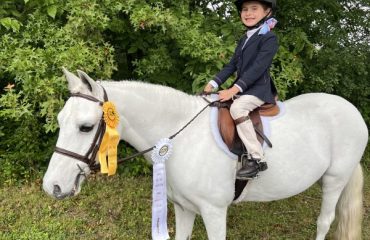
Photo:
Taking a break from riding or showing can result in returning refreshed to riding, resulting in an improved performance.
Photo by Eye Was Here Photography
Pause and reprocess—reprocess and proceed!